

Resil can be used in various stages of potato cultivation. Due to its rapid absorption in the (hair)roots and/or leaves and its transport function, a dosage of 1 liter per hectare is effective. Below is a general recommendation for using Resil in your potatoes. For specific questions, we always recommend consulting an agronomist or advisor.
Our recommendation:
Resil can be applied in potato cultivation in three ways:
- During planting: Mix 1.5 liters of Resil per hectare during planting with liquid fertilizer for a good start and more (hair)root development.
- Throughout the entire cultivation. Optionally after application of point 1. Mix every other phytophthora treatment Resil in the tank according to the following schedule:
1st and 3rd phytophthora-treatment: 0.5 liters of Resil per hectare.
5th, 7th, 9th and 11th phytophthora-treatment: 0.75 liters of Resil per hectare.
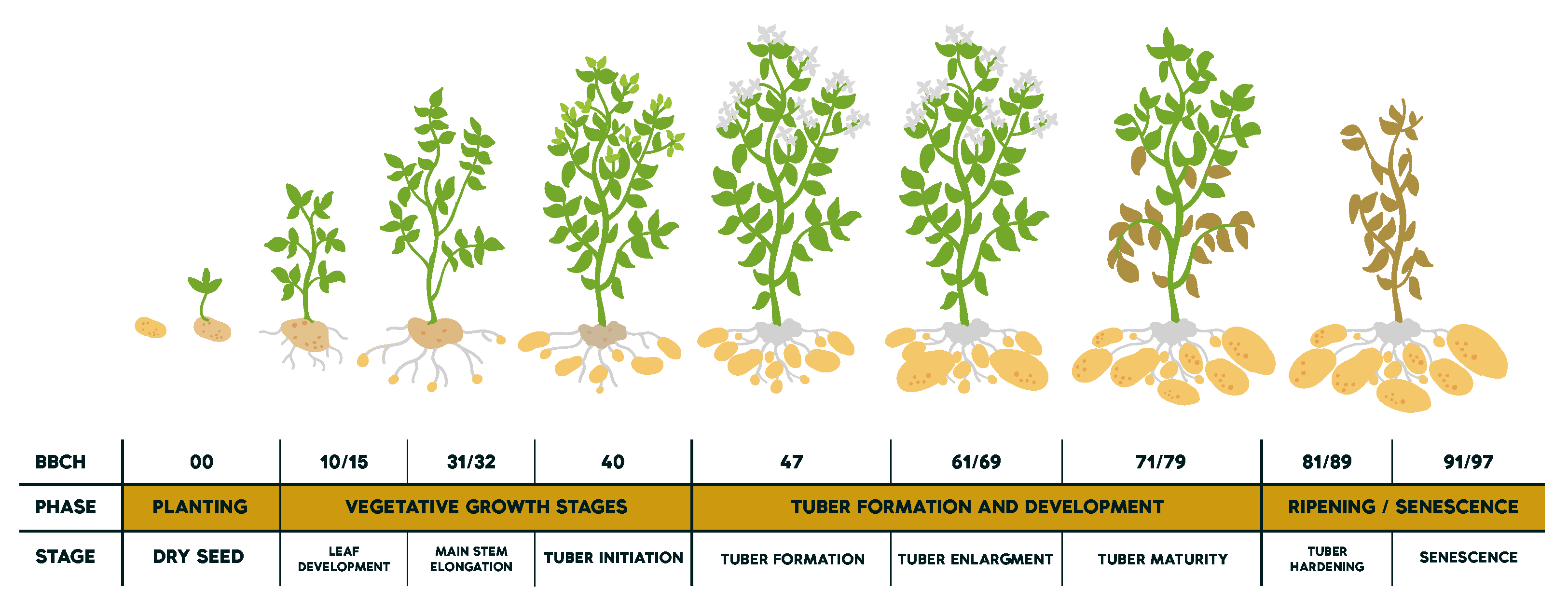
- Before or after a stress event: Mix 1.5 liters of Resil per hectare with the next spray just before or after a stress event. Stress events can arise from, among others, drought, heat, cold, and/or heavy rain. After application, Resil ensures that plants absorb more nutrients, making them more resilient to these stress factors and promoting dominant root growth again.
Stop using Resil around mid/end August so that the plants can ripen. Always perform a trial spray. Maintain a minimum interval of 5 days.
Resilience
Fulvic Acid:
By administering fulvic acid, we are essentially assisting nature in making plants more resilient to (abiotic) stress, restoring balance, and allowing plants to regain dominance in root growth.
Resil:
The name Resil is derived from the word ‘Resilience’. NutriTrain’s Resil ensures that plants, after application, are more resilient to abiotic stress and pathogens. Abiotic stress factors include drought, heat, and/or salinity. Even cold and wet conditions can indicate stress for plants.
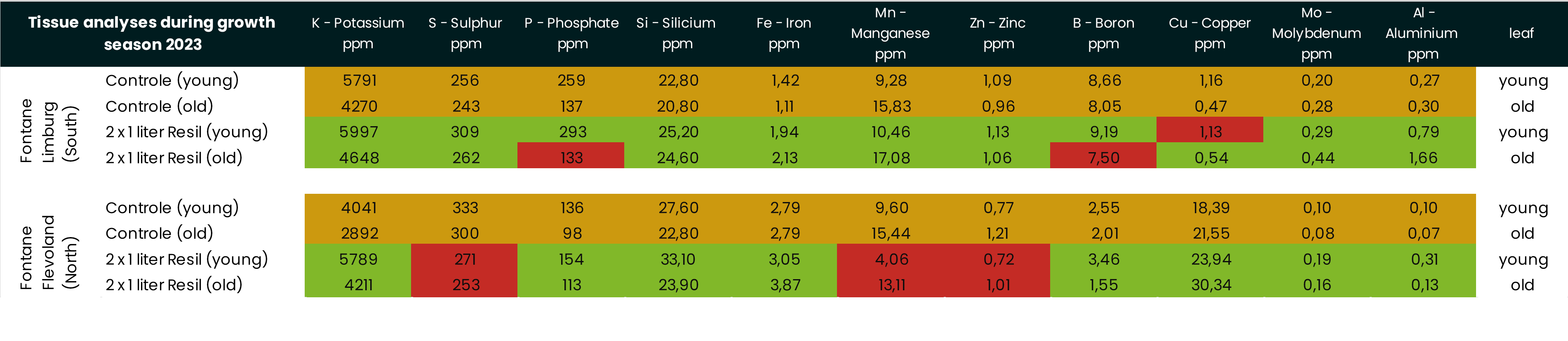
Resil contributes to a more efficient and rapid absorption of (micro)nutrients through the hair roots and/or leaves, making plants naturally healthier and more resilient to these stress factors and potential pathogens. The image below clearly shows that (micro)nutrients are better absorbed with the application of just 2 times 1 liter Resil compared to untreated objects.
Resil also acts as a transporter (train), ensuring that the absorbed (micro)nutrients from the soil and/or leaves are better distributed by the plants and reach the right organs (stations); a “NutriTrain!” This contributes to more consistent growth, development, and a more stable hormone balance in plants. Using our fulvic acid Resil results in higher-quality potatoes, increased yield per hectare, and more uniform-sized tubers.
Here is a summary of the key benefits of using Resil in your crops:
- Rapid and uniform emergence
- Improved absorption and transport of (micro)nutrients
- More efficient water use
- Increased resilience to abiotic stress
- Promotion of soil microbes
- Higher quality and yields
Quality
Fulvic Acid:
During any form of stress, natural processes in the plant undergo changes, often causing the stagnation of root and plant growth, leading to reduced yields. Fulvic acid is naturally present in the soil but often in insufficient concentrations. By actively supplying fulvic acid to the roots and plants, natural processes are stimulated, especially during times of stress. Fulvic acid facilitates interaction between soil organisms (e.g., bacteria and fungi) and the (hair)roots of plants. Administering fulvic acid essentially assists nature in making plants more resilient to (abiotic) stress, restoring balance, and promoting the (root) growth of plants.
The accompanying image quickly illustrates the results of using our fulvic acid, named “Resil,” during the growth process; more uniform tubers, better filling during the first setting, and fewer tubers during the second setting.

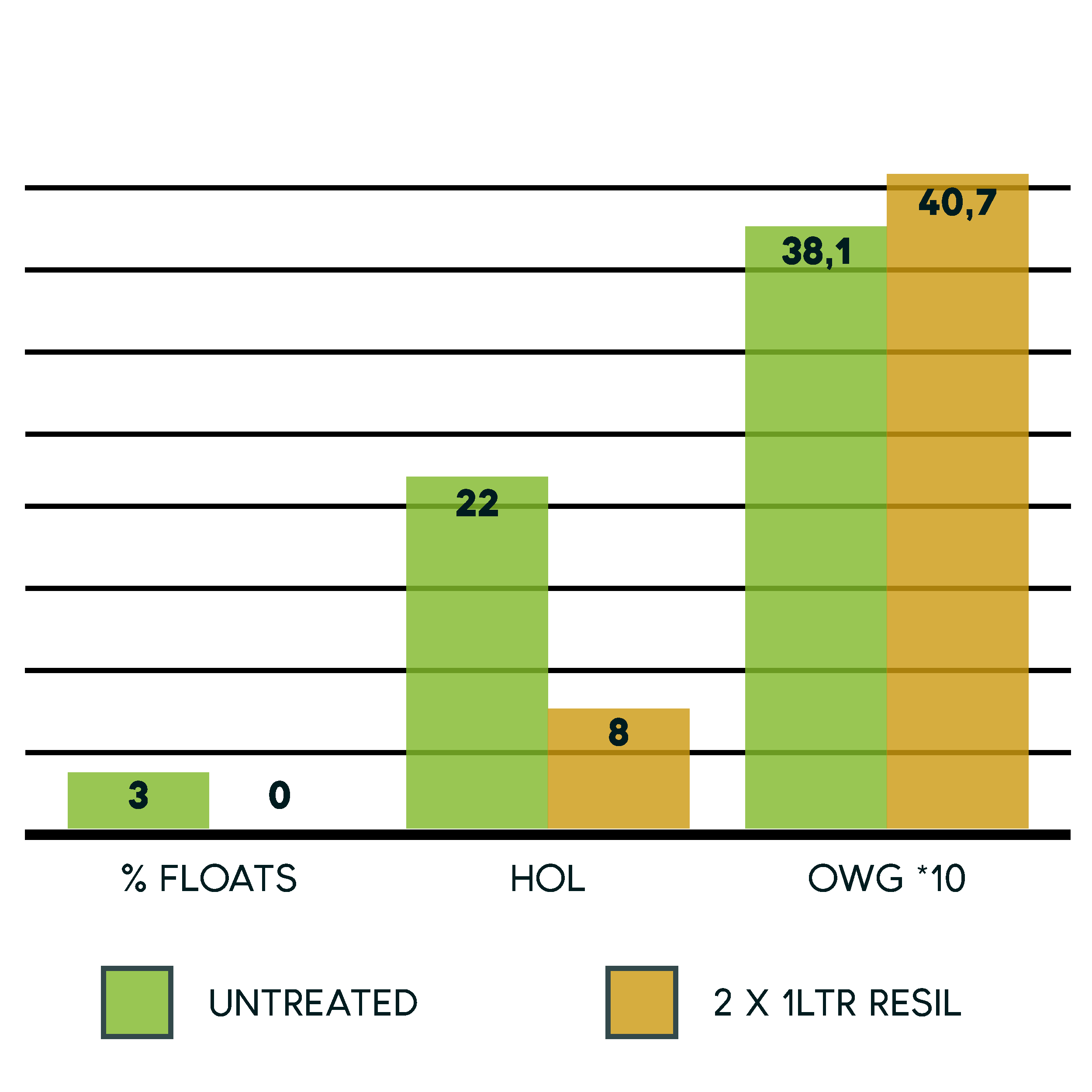
The use of our fulvic acid shows a clear advantage when analyzing tubers post-harvest. The graph indicates fewer hollow hearts and floaters compared to the standard. Additionally, the underwater weight (UWW) is significantly higher. Resil was sprayed twice with 1 liter each during fungicide applications.
In conclusion, the application of our fulvic acid, Resil, contributes to a more stable growth process, resulting in a qualitatively better product with higher yields.
Disclaimer
Caution: These suggestions are offered solely for informational purposes. As NutriTrain lacks control over storage, handling, application, or the influence of weather, plant, or soil conditions before, during, or after application (all of which may impact the effectiveness of our program), no accountability or liability will be assumed for any performance failures, losses, damages, or injuries (whether consequential or otherwise) resulting from such storage, application, or use under any circumstances. The buyer takes full responsibility for utilizing NutriTrain’s products. NutriTrain strongly advises consulting with an agronomist before applying the product. If these recommendations conflict with any fertilization guidance received, NutriTrain suggests adhering to the received advice. When in doubt, NutriTrain recommends reaching out to your consultant. The general terms and conditions of delivery are applicable to all our shipments, and they can be found on www.nutritrain.eu.